Externalization: the one productivity principle that actually works for ADHD
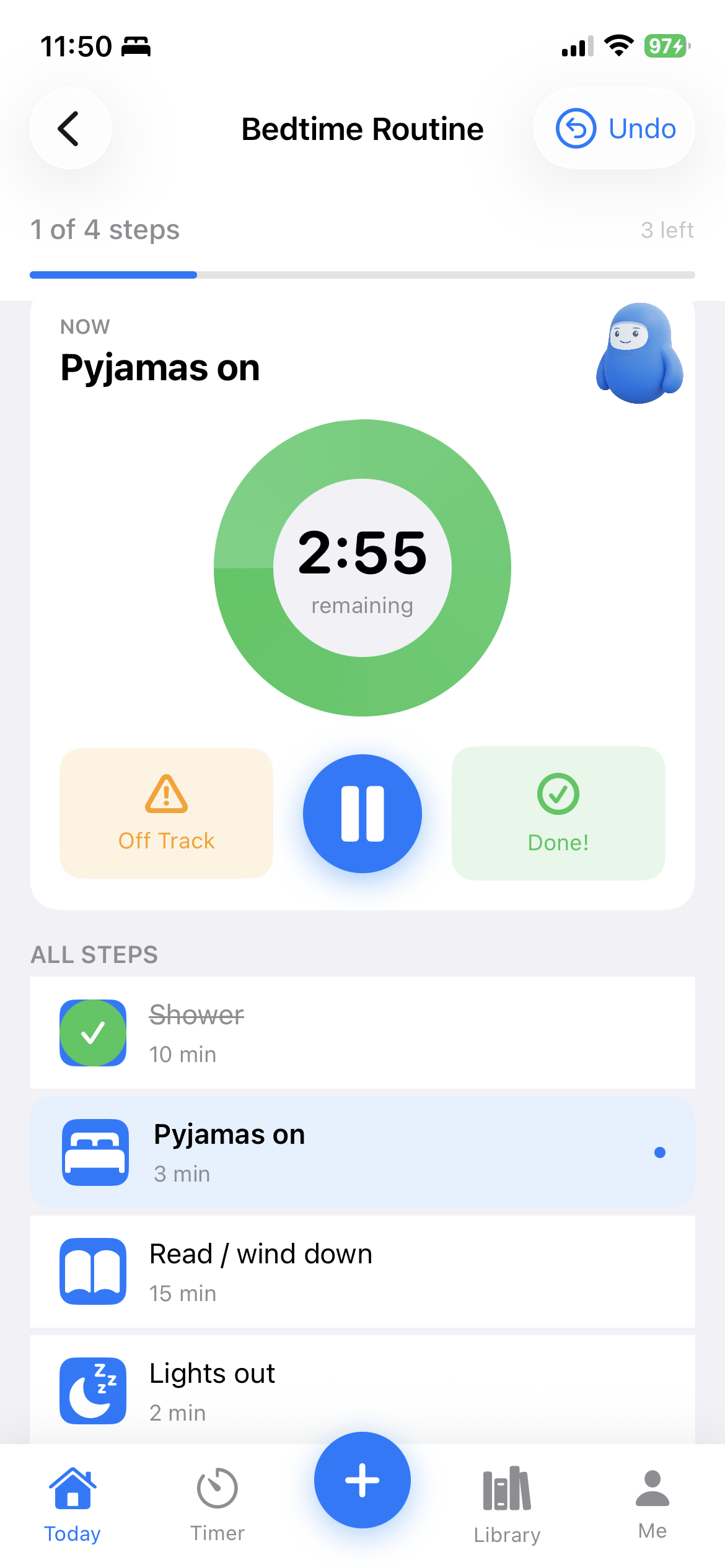
If you can only remember one ADHD strategy, make it this: move cognitive load out of your head and into your environment. Every effective system for ADHD — whether it's CBT, coaching, school accommodations, or apps like TimeNinja — comes back to this single principle.
The problem: working memory is your weakest resource
Working memory holds the small amount of information you're actively using right now — a phone number, the steps of a recipe, what you walked into the kitchen for. ADHD brains have a measurable working-memory deficit. Anything you try to "remember to do later" leaks within minutes.
That's why "I'll just remember" is the most expensive sentence in ADHD productivity. Every time you say it, you commit your most overloaded cognitive resource to a job it can't reliably do.
What externalization actually means
Externalization is the deliberate practice of taking information that would normally live in your head and placing it somewhere your brain can see instead of remember:
- An appointment in a shared calendar, not in your memory
- A grocery list on your phone, not your mental note
- A visual timer counting down, not a sense of "about 10 minutes"
- A morning routine checklist on the bathroom mirror, not "I'll figure it out"
- Tomorrow's clothes laid out tonight, not "I'll decide in the morning"
Why this is research-aligned, not just folk wisdom
CBT-for-adult-ADHD modules explicitly identify a single calendar plus a single task list system as the foundation of treatment — because the person must reliably know "what" and "when" before any higher-order strategy can work.
Visual activity schedules — picture-based, sequence-based representations — are a research-supported intervention for children with ADHD, with promising evidence for improving on-task and on-schedule behaviour. The same principle scales to adults.
The common thread: externalised information beats internalised intention, every time.
Five categories of things to externalize
1. Time itself
Time is the hardest thing to sense internally for ADHD brains. Externalize it with visual timers, analog clocks in workspaces, and Live Activities on your lock screen. TimeNinja's shrinking ring is this principle in app form.
2. Tasks and intentions
Capture immediately, even sloppily. The capture mechanism matters less than the act of capturing. Voice memos, sticky notes, apps — all work if you trust them.
3. Sequences and routines
For repeating chains (morning routines, school prep, end-of-workday shutdown), externalize the order. Don't decide which step is next every morning — let the list do it.
4. Decisions
Pre-decide. Same breakfast 4 days a week. Same clothes Monday through Thursday. Same start-time for morning routine. Decision fatigue is real, and ADHD brains pay a higher tax on it.
5. Future consequences
"This deadline is in 2 weeks" doesn't motivate. "I need to start this Thursday at 6:20pm" does. Backward planning externalises the deadline-to-now connection.
The opposite of externalization (and why it fails)
"Just try harder to remember." "Use more willpower." "Build the habit through repetition alone." These all rely on internal control — the exact system that's weakened in ADHD. They work for the average neurotypical brain. They fail predictably for ADHD brains, and the failure produces shame, which makes the next attempt harder.
The trick is to stop blaming yourself for not remembering, and start designing an environment that doesn't ask you to.
Even another person counts as environment: body doubling externalises accountability by moving your intention out of your head and into the room.
How TimeNinja externalizes everything
Every feature in TimeNinja is an externalization tool:
- Quick Task externalises today's intentions
- Backward planning externalises the deadline-to-start-time calculation
- Visual timer externalises time perception
- Live Activity externalises ongoing focus to the lock screen
- Routines externalise step sequences
- Real Time Library externalises duration estimates as data, not gut feel
- Done Board externalises completed work for dopamine reward
None of it asks you to "try to remember." All of it makes the answer visible at the moment you need it.
A challenge for this week
Pick one thing you currently hold in your head and externalize it. Just one. Tomorrow's outfit. Tonight's bedtime alarm. The next 3 emails you need to send. Move it from brain to environment and notice how much lighter the next 24 hours feel.
That's the entire ADHD productivity playbook compressed into a single experiment.